

Traditions & everyday lifeMuğla · Ege
Muğla zeybeği
The Aegean zeybek dance as it lives in Muğla, from slow heavy zeybeks to the Kerimoğlu tune.








The Turkish name
Muğla zeybeği
At a glance







- Type
- Aegean folk dance
- Kerimoğlu Eyüp
- 1882–1901
- Kerimoğlu Türküsü Evi
- Yerkesik, Menteşe
Read more
This page was written from these sources.
- Geçmişten günümüze süregelen bir yaşam biçimi: zeybek ↗e-gzt ADÜ, Aydın Adnan Menderes Üniversitesi · Checked 2026-09-23
- Muğla Merkezinde Kadın Zeybek Havaları ↗İstanbul Teknik Üniversitesi · Checked 2026-09-23
- Kerimoğlu Türküsü Evi ↗T.C. Menteşe Kaymakamlığı · Checked 2026-09-23
- Muğla'da Kerimoğlu Türküsü Evi'nde 125 yıllık efe hikayesi yaşatılıyor ↗Anadolu Ajansı · Checked 2026-09-23
The story
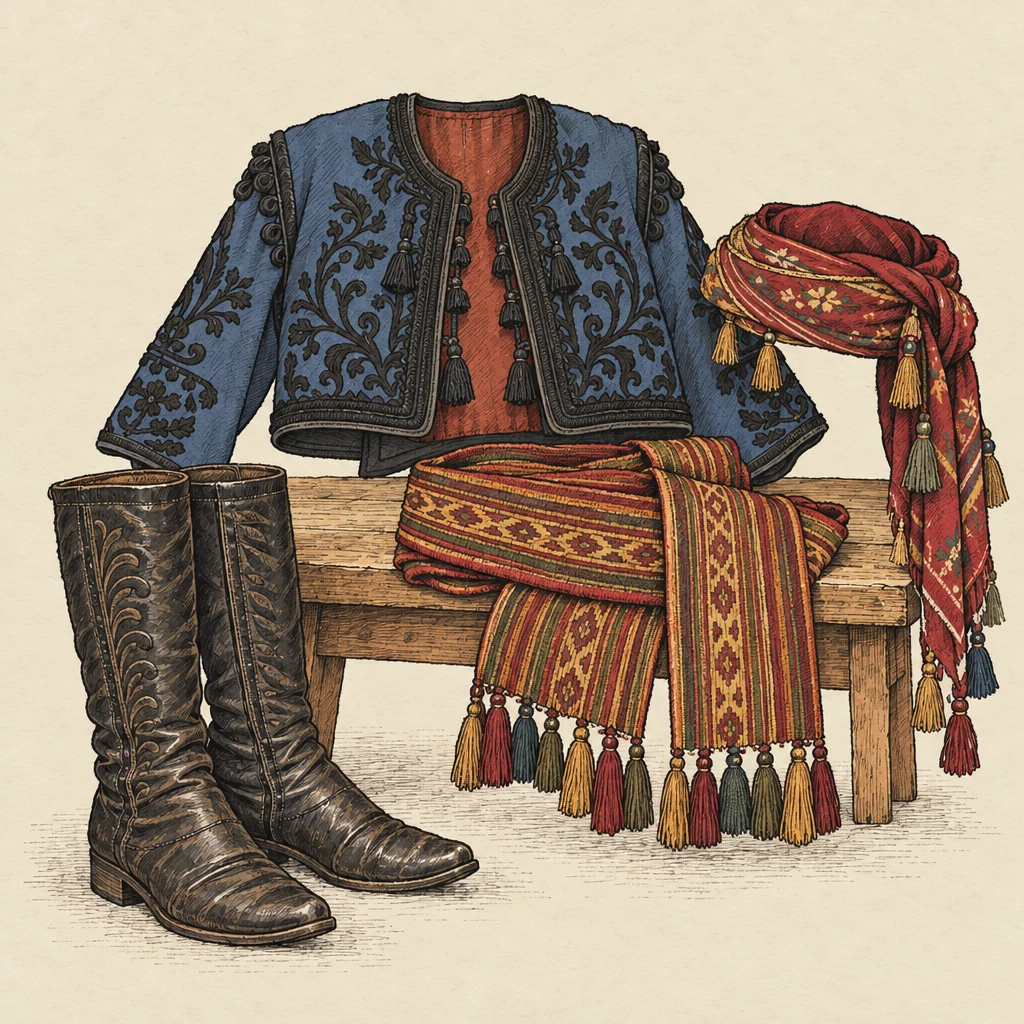
The zeybek is a folk dance of western Anatolia, danced alone or by a few dancers in a circle. The dancer opens the arms to the sides at shoulder height, moves slowly with long steps and now and then drops to touch one knee to the ground. It is said to show a brave man who protects the people. Muğla is one of the seven areas of the zeybek country, with İzmir, Aydın, Denizli, Manisa, Balıkesir and Çanakkale, while Fethiye belongs to the quicker Teke zeybek of the south.
The slow ağır zeybek is danced in Milas among other places, and Muğla also has zeybek tunes for women: a 1998 İTÜ thesis studied nine of them from the town centre.
The best-known Muğla zeybek is Kerimoğlu. It began as a lament for Kerimoğlu Eyüp (1882–1901), shot dead at 19 in a raid on a house in Yerkesik, and was later sung as a zeybek that is danced at weddings. The dance was collected in 1985 by Mehmet Ali Eren, and the house is now a small museum.