

Traditions & everyday lifeMuğla · Ege
Süngercilik
Sponge diving, the trade that kept Bodrum's boats busy for much of the twentieth century.








The Turkish name
Süngercilik
At a glance






- Place
- Bodrum, Muğla
- Busiest years
- 1945–1965, about 150 boats
- Novel
- Deniz Gurbetçileri, Halikarnas Balıkçısı, 1969
- Museum
- Bodrum Süngercilik Müzesi, protocol signed 2022
Read more
This page was written from these sources.
- Bodrum ↗Wikipedia · Checked 2026-09-23
- Türkiye'nin ilk süngercilik müzesi Bodrum'da kuruluyor ↗Bodrum Belediyesi · Checked 2026-09-23
- Sünger diyarının geçmişine açılan pencere: Bodrum Süngercilik Müzesi ↗Yacht Türkiye / bmag · Checked 2026-09-23
- Deniz Gurbetçileri ↗Vikipedi · Checked 2026-09-23
The story
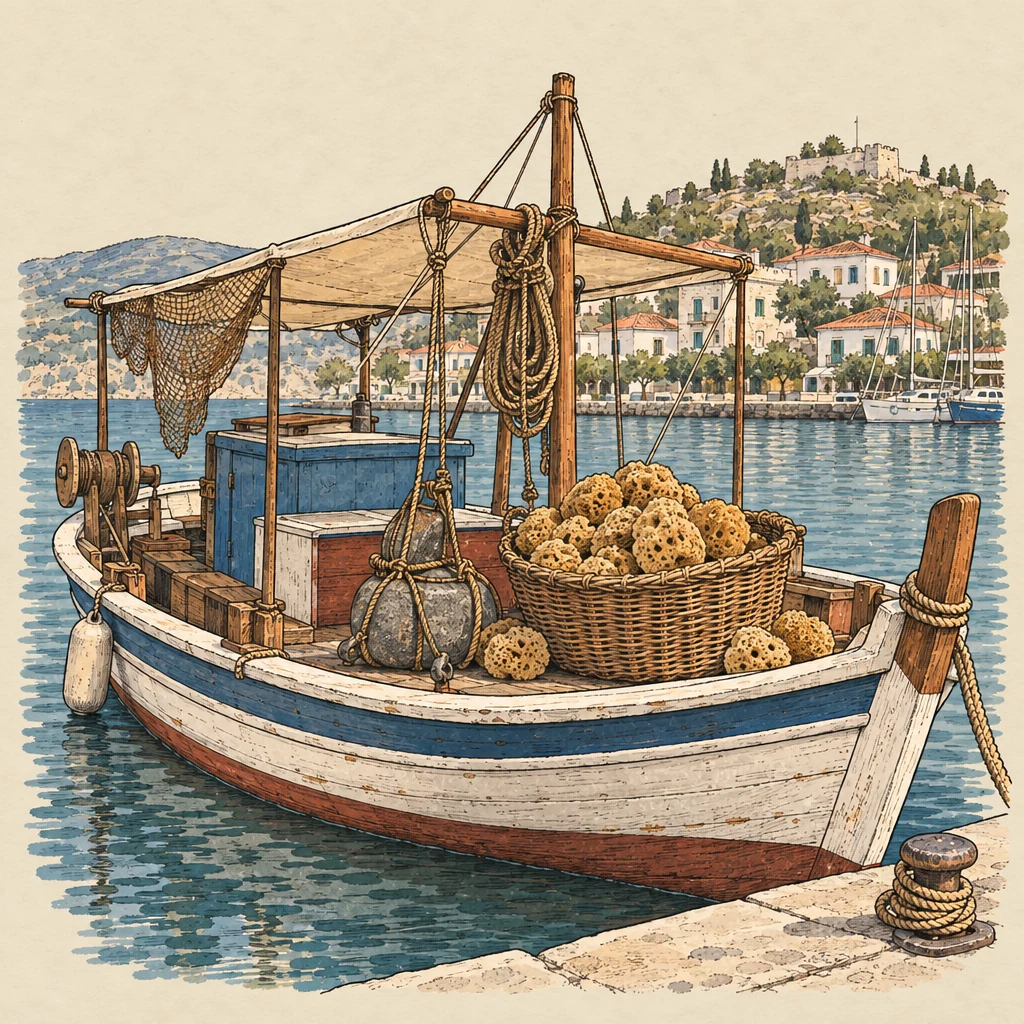
Sponges have been gathered from the sea bed around Bodrum for a very long time, and for much of the twentieth century fishing and sponge diving were the town's main living. Modern sponge diving took hold after islanders from Kos and Crete settled in Bodrum in the early 1920s, following the population exchange between Greece and Türkiye. In its busiest years, between 1945 and 1965, about 150 boats worked from the town.
It was dangerous work, and many divers were lost or disabled. Sponge diseases, artificial sponges and a ban on diving eventually brought the trade to an end, and tourism took its place. Halikarnas Balıkçısı wrote about the hard lives of Bodrum's sponge divers in his 1969 novel Deniz Gurbetçileri.
In 2022 Bodrum Municipality signed a protocol to set up Bodrum Süngercilik Müzesi, described as Türkiye's first museum of sponge diving, to keep the craft's memory alive.